
Get the Facts! Master B2 First Speaking Part 2 with our guide. Learn essential tips for comparing pictures, organizing your ideas, and practicing effectively! This guide will clarify the format, provide practical advice, and help you excel in this critical section of the exam. For comprehensive information on other parts of the test, visit our general advice page.
Home > B2 First > Speaking > Part 2
Overview of B2 Speaking Part 2
| Task Type and Format | An individual ‘long turn’ for each candidate with a brief response from the second candidate. In turn, the candidates are given three pictures to talk about. |
| Focus | The focus is on organising a larger unit of discourse; comparing, describing, expressing opinions and speculating. |
| Timing | A 1-minute ‘long turn’ for each candidate, plus a 30-second response from the second candidate. The total time for Part 2 is 4 minutes. |
B2 First Speaking Part 2 Quiz: Only 1 Minute!


Task Type and Format:
- Individual ‘Long Turn’: Each candidate speaks for 1 minute.
- Brief Response: The second candidate gives a 30-second response after their partner’s long turn.
- Pictures Provided: You will be given two pictures and asked to discuss them.
Focus:
- Organizing Discourse: Compare, describe, express opinions, and speculate about the images.
- Timing: Total time for Part 2 is 4 minutes (1 minute for each candidate’s long turn + 30 seconds for the response).
Purpose:
- Extended Discourse: Demonstrate your ability to articulate ideas clearly and coherently.
- Interaction: The listening candidate comments briefly after their partner’s turn. They should not interrupt during the long turn.
Key Details About the Task
In Part 2, you are given three pictures with prompts. You must:
- Compare: Discuss similarities and differences between the images.
- Express Opinions: Share your thoughts on what the images might represent.
- Speculate: Offer possible scenarios or motivations related to the images.
The prompts will involve direct questions above the pictures, guiding your response.
Expert Advice for B2 First Speaking Part 2
1. Practice Speaking for a Minute:
- Regularly time yourself speaking on a set topic to develop your ability to speak for a full minute. This practice helps prevent finishing too early.
2. Use Various Pictures for Practice:
- Collect images from newspapers, magazines, or online sources. Practice comparing these pictures and imagining exam questions related to them.
3. Record and Review Yourself:
- Use your phone to record 1-minute presentations. This practice helps build confidence and improves your ability to project your voice.

4. Move Beyond Simple Description:
- Ensure your responses include speculative elements. For example, instead of merely describing a picture, consider deeper insights, such as possible scenarios or motivations.
Basic Response Example: “The picture shows two people on an expedition.”
- Enhanced Response Example: “These people might be on a challenging expedition, like climbing a mountain or exploring the Arctic. Their journey could be for personal achievement or research. The strong bond between them is crucial for their safety and success, highlighting their teamwork and mutual trust.”
5. Maximize Your Speaking Time:
- Continue speaking until the examiner says ‘Thank you’. This ensures you make full use of your 1-minute turn.
6. Organize Your Ideas Coherently:
- Practice linking ideas and comparing pictures using useful phrases. Build a list of these phrases to enhance your fluency and coherence during the exam.
Practice Resources
To prepare effectively, use sample pictures and practice with various prompts. Focus on developing a structured approach to discussing and comparing images.
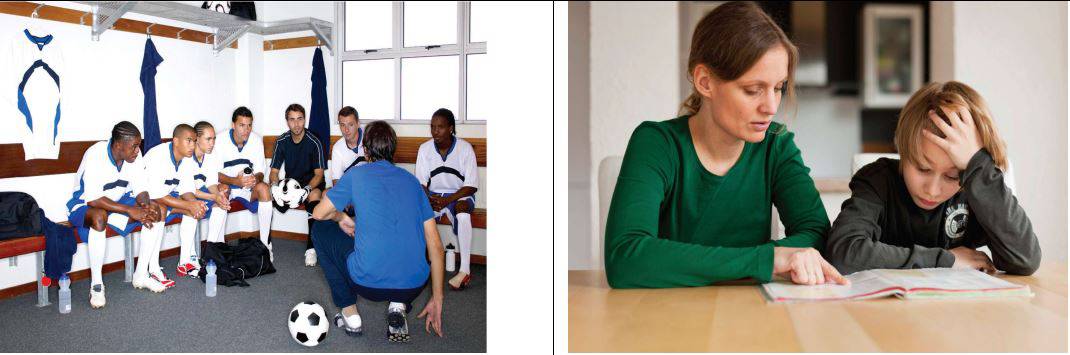
B2 First Speaking Part 2 Sample Pictures
Why might it be important to give advice in these situations?
Conclusion
Understanding the format and applying these strategies will help you excel in B2 First Speaking Part 2. Practice regularly, refine your techniques, and approach the exam with confidence. For more detailed advice on other parts of the B2 First Speaking test, explore our additional resources. Good luck with your preparation!
information on this page is adapted from The Cambridge C1 Handbook for Teachers