
C1 Advanced Speaking Part 2 is a critical section of the exam where you need to deliver a well-structured, fluent, and engaging talk, should only take one minute. Whether you’re comparing and contrasting images or answering the questions, how you present your ideas is crucial to scoring highly. Whatever you would like to say, if your answers are structured, they will always sound more fluent, coherent and cohesive. If you have a structure for any C1 Advanced Speaking Part 2 question, then it leads you through your answer, reducing worry and hesitation.
Home > C1 Advanced > Speaking > Part 2
Preparation
Cambridge C1 Advanced has four main sections: Reading, Listening, Writing and Speaking. Each of these sections are divided into several sub-sections so it is advisable to learn the format of the exam thoroughly as well as studying the necessary English to pass it.
General Tips for Exam Success
Writing a C1 Advanced essay, for example has several rules, so it is better to understand what they are before you take your test. How many words do you need to write? How long is the writing test? Should it be formal, semi-formal or informal?
You can take it further and ask yourself more detailed questions. How many paragraphs should I write? What kind of paragraphs are they? How many sentences should there be in each one?
Knowing the answers to these and similar questions gives you a much better chance to do well in your writing test. This also applies to the speaking test.
C1 Advanced Speaking
How many parts are in the C1 Advanced Speaking test? What EXACTLY do you need to do in each part? How can I make each part easier? What kind of sentences do I need to say?
In C1 Advanced Speaking Part 2, it is necessary to be extremely clear about what your goals are before the test, what you should talk about and the kind of language to use.
In this article, we’re going to talk about how to structure your answers for C1 Advanced Speaking Part 2.


Methods for Structuring Your Answer
In C1 Advanced Speaking Part 2, you have to choose to talk about two of the three pictures you are shown.
First thing you need to do is state which ones you have chosen. State which ones they are and move on.
Then there are two main ways to talk about these two pictures. (Remember, you only have 1 minute. It seems VERY VERY short in the exam!!!)
Ping-Pong
This method involves comparing something from your first picture to the same kind of thing in the second. Then you just keep on comparing and answering the question if you can.
Structure:
- Say which photos you are going to talk about
- Answer the main question
- Say something about the first picture, then compare it to the same thing in the second picture.
- Say something about the second picture, then compare it to the same thing in the first one.
- Say something about the answer to the other question regarding the first picture, then compare it to the same thing in the second picture. (how they are feeling in this question)
- If you have time, Say something about the second picture, then compare it to the same thing in the first one.
You will only have time to change about 3 or 4 times, so when you prepare, prepare 3 or 4 things you should be able to compare in any pictures.
One After the Other
In this method, you talk about one picture, then you talk about the other one.
In Ping-Pong, you use more of the target language you need for your test, i.e. the comparison and contrasting language. Even if you pause for longer than you would like, you have still used the right words.
With One After the Other, however, it is far too easy to speak for too long about picture one, which doesn’t leave you enough time for picture 2. This is even worse if you hesitate.
Structure:
- Say which photos you are going to talk about
- Say what is happening in the first picture
- Answer the main question (and the second question if you can)
- Add more information about the photo
- Say what is happening in the first picture
- Answer the main question (and the second question if you can)
- Add more information about the photo
Sample Answers
Take a look at the different answers to Sample Answer 1.
I wrote this answer to show the two different methods, however, I only looked at the pictures and spoke in sample answer 2.
Sample Answer 1 (both methods)
Why might people have chosen to experience these things?
How might they be feeling?
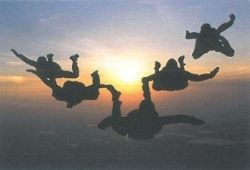
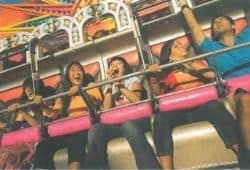
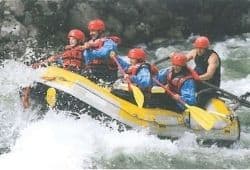
Using the above pictures as an example, here are examples of the two methods.
Ping-Pong
I’d like to talk about the first and third photos. Although there are a similar number of people in each picture, they are doing completely different extreme sports, for excitement in my opinion. The skydivers are falling through the air, while the white-water rafters are paddling on a river. Each parachutist has to take care of themselves; however, the rafters need to work as a team. I would say that they are all feeling exhilarated and are totally in the moment. I imagine another similarity is that they are all wearing similar types of safety helmets, but the rafters’ lifejackets would have no place in the air, nor the skydivers’ parachutes in the raft.
Structure for this answer
- Say which photos you are going to talk about – I’d like to talk about the first and third photos.
- Say something about the first picture, then compare it to the same thing in the second picture. – Although there are a similar number of people in each picture, they are doing completely different extreme sports,
- Answer the main question – for excitement in my opinion
- Compare the pics again – Each parachutist has to take care of themselves; however, the rafters need to work as a team.
- Answer the second question – I would say that they are all feeling exhilarated and are totally in the moment.
- Say something about the first picture, then compare it to the same thing in the second picture. – I imagine another similarity is that they are all wearing similar types of safety helmets, (similar)
- If you have time, say something about the second picture, then compare it to the same thing in the first one. – but the rafters’ lifejackets would have no place in the air, nor the skydivers’ parachutes in the raft.
One After the Other
I’d like to talk about the first and third photos. In the first picture there are five skydivers free falling in the sky. I think they do it for excitement and I guess they are all completely engrossed in what they are doing. I would be surprised if they are not wearing standard safety helmets and parachutes, they have packed by themselves, so they know they will work. There are also five white-water rafters paddling like crazy down a fast-flowing river in picture three. As far as I’m concerned, they will be completely concentrating on what they are doing, just like the skydivers. It looks as if they too are wearing similar safety helmets to the parachutists, but have lifejackets on, which would be totally out of place in the sky.
Structure for this answer
- Say which photos you are going to talk about – I’d like to talk about the first and third photos.
- Say what is happening in the first picture – In the first picture there are five skydivers free falling in the sky.
- Answer the main question (and the second question if you can) – I think they do it for excitement and I guess they are all completely engrossed in what they are doing.
- Add more information about the photo – I would be surprised if they are not wearing standard safety helmets and parachutes, they have packed by themselves, so they know they will work.
- Say what is happening in the first picture – There are also five white-water rafters paddling like crazy down a fast-flowing river in picture three.
- Answer the second question – As far as I’m concerned, they will be completely concentrating on what they are doing, just like the skydivers
- Add more information about the photo – It looks as if they too are wearing similar safety helmets to the parachutists, but have lifejackets on, which would be totally out of place in the sky.
Sample Answer 2 (One After the Other)
As you can tell from the video below, I had no preparation for this question except knowing the two structures. I knew I wanted to answer using the Ping-Pong method because it is more reliable, but it didn’t happen like that. I gave the best answer I could without making any notes for this article. I still felt stressed even though I have taught this exam for several years.
What might be difficult for the people to deal with in these situations?
How important might it be for them to deal with the situation well?
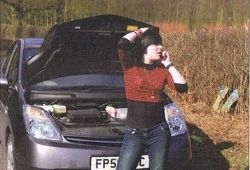
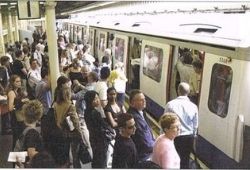
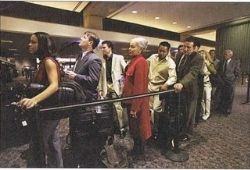
1 minute to compare and contrast the two pictures you have chosen as well as answer the two questions.
One After the Other
I’d like to choose the first picture and the second picture. I think the girl with the broken-down car in the first picture looks like she’s stuck in the middle of nowhere in the countryside. And I think it’s important that she deals with this situation well, otherwise, it could be quite unsafe. Whereas in the second picture, there are hordes of people waiting to get on a train or a subway, probably a subway, and they need to deal with that situation well just to get home at night. So, in that picture, there are many, many tens of, tens of people, whereas in the first picture, there’s the girl by herself. The girl is outside looking around, whereas the people in the subway station, are anywhere but outside.
Video
Structure for this answer
- Say which photos you are going to talk about – I’d like to choose the first picture and the second picture.
- Say what is happening in the first picture – I think the girl with the broken-down car in the first picture looks like she’s stuck in the middle of nowhere in the countryside.
- Answer the main question (and the second question if you can) – And I think it’s important that she deals with this situation well, otherwise, it could be quite unsafe. Whereas in the second picture, there are hordes of people waiting to get on a train or a subway, probably a subway, and they need to deal with that situation well just to get home at night.
- Compare again – So, in that picture, there are many, many tens of, tens of people, whereas in the first picture, there’s the girl by herself.
- Compare again – The girl is outside looking around, whereas the people in the subway station, are anywhere but outside.
Important
It’s important to note that the examiners know that this part of the speaking test is tricky, that you will make mistakes and sometimes get lost in your answer. However, it is crucial that you speak!!!!!
It is also important to mention that the structure doesn’t need to be rigid. If you find yourself talking about something apart from the questions, then compare it to something in the other picture. Do your best!
Common Errors in C1 Advanced Speaking Part 2
- Failing to Fulfil the Task
- Mistake: Describing the pictures rather than comparing, contrasting and expressing an opinion
- How to Avoid: Always break down the pictures into smaller components and ensure your answer covers each part. Practice by timing yourself to answer questions within the 1 minute.
- Lack of Structure in Your Answer
- Mistake: Speaking without a clear plan.
- How to Avoid: Organize your response by using the structures described above
- Overcomplicating Your Language
- Mistake: Trying to use overly complex vocabulary or grammar structures that end up sounding unnatural or confusing.
- How to Avoid: Focus on clarity. Use language that you are comfortable with and that flows naturally. Aim for accuracy over complexity.
- Overuse of Fillers
- Mistake: Frequently using fillers like “um,” “uh,” or “you know” while thinking of what to say next.
- How to Avoid: Using fillers is not wrong, but practice pushing yourself to complete your planned structure. If you get stuck, move on. You have no time.
- Ignoring Pronunciation and Intonation
- Mistake: Speaking too quickly, too slowly, or with poor intonation, making it difficult for the examiner to understand you.
- How to Avoid: Practice speaking at a moderate pace. It is difficult to add the usual stress and intonation in this part of the speaking test, so don’t worry. The examiner has to understand you, and you have to give your best answer.
FAQ Section
Here are some potential Frequently Asked Questions for this page, with answers:
Q1: How long should my answer be for C1 Advanced Speaking Part 2?
- A1: For Speaking Part 2, you should aim to speak for about 1 minute. It’s important to give a detailed response, but also stay concise. Practicing timed responses will help you get the right balance between depth and brevity.
Q2: What types of questions are asked in C1 Advanced Speaking Part 2?
- A2: In this part, you’ll be asked to talk about two pictures from a set of three with two related questions. You will be asked to compare, contrast, give your opinion and speculate.
Q3: How can I improve my fluency for Speaking Part 2?
- A3: The key to improving fluency is practice. Try answering sample questions aloud, and focus on maintaining a natural flow of speech. Record yourself and listen for areas where you can improve, like avoiding pauses or fillers. Consistent practice with timed responses is crucial.
Q4: Should I memorize answers for C1 Advanced Speaking Part 2?
- A4: It’s not recommended to memorize answers word-for-word, as this can sound robotic. Instead, practice key phrases, vocabulary, and strategies that will help you stay on track while giving a natural-sounding response.
Q5: What should I do if I can’t remember a word?
- A5: If you can’t remember a word, just move on to talk about the next point. In C1 Advanced Speaking part 2, if you hesitate, think about a word or try and explain yourself too much you will run out of time. Try to stay calm and move on. You are going to make mistakes anyway, this will just be another one. If you don’t speak, it will be much worse.
Conclusion
In summary, successfully tackling C1 Advanced Speaking Part 2 requires practice, preparation, and a clear understanding of the exam format. By studying sample answers, avoiding common mistakes, and following the tips outlined here, you’ll be well on your way to improving your speaking score. Keep practicing and remember that with the right approach, you can confidently express your ideas and impress the examiner. Ready to boost your score? Start practicing with these tips today, and don’t forget to check out our other speaking resources for more guidance.