
For most IELTS Speaking test-takers, knowing what they need to do to get a higher band score is extremely vague. It is almost impossible for them to predict what score they will get, so often, they can only use their last IELTS Speaking test score as a guide.
Home > IELTS > Speaking > Sample Answers
An AI has created these sample answers so such students can discover the changes they need to make to their speaking responses to improve their results and reach their target IELTS Speaking score.
This page is for the IELTS Speaking Part 2 question below and its associated Part 3 questions:
Describe a movie you like that you watched recently
You should say:
When and where you watched it
Who you watched it with
What it was about
And explain why you like this movie
Pros and Cons of This Method
Pros:
- Grammar: You can easily see the differences in the grammar used in each question.
- Vocabulary: You can easily see how the words and phrases are to a higher standard as the scores improve.
- Fluency and Coherence: As the score improves, you can see the increased use of sequence or discourse markers to assure the listener knows what is happening and when.
- Pronunciation: This is worth 20% of your score, so you should pay attention to the differences here. A simple way to improve
Cons:
- Grammar: Although there are differences between the answers, there are no mistakes, which is uncommon for these band scores.
- Vocabulary: While it is easy to see what is needed, to use better vocabulary, you need to practice seriously so you can include it fluently in your answers.
- Fluency and Coherence: There are very few pauses or hesitations which usually mark an IELTS Speaking test-takers Part 2 response.
- Pronunciation: Obviously, without audio or video, it’s impossible to get an example of the differences between the scores.
Author’s Thoughts:
- Video. Although it seems to be standard to put a video on YouTube with a teacher’s own answer to these questions, I don’t have the time or the patience to do that.
- Why AI?: I can make more sample answers with an AI in a short time. Anyone could do that, but many don’t want to or are too lazy.
- Different scores: The idea is to show the differences between the answers, rather than having perfect answers. Some of these answers are too short, or they repeat the question in the first sentence. They are not perfect, but they inform students what they need to do to improve!
- Me: I used to make videos of speaking answers, but it’s not about me or how good my course is, or how many likes I get on Instagram or YouTube. It’s about trying to help you pass your speaking test and changing your life.
- You: If you have any ideas on how this could be improved, any other pros and cons, or would just like to comment, please use the comment box at the bottom of the page. If you like the content, please share it.
Home > IELTS > Speaking > Part 2 Sample Answers
IELTS Speaking Part 2 Quiz: It Doesn’t Need to be Hell!


IELTS Speaking Part 2 AI Answers
Describe a movie you like that you watched recently
You should say:
When and where you watched it
Who you watched it with
What it was about
And explain why you like this movie
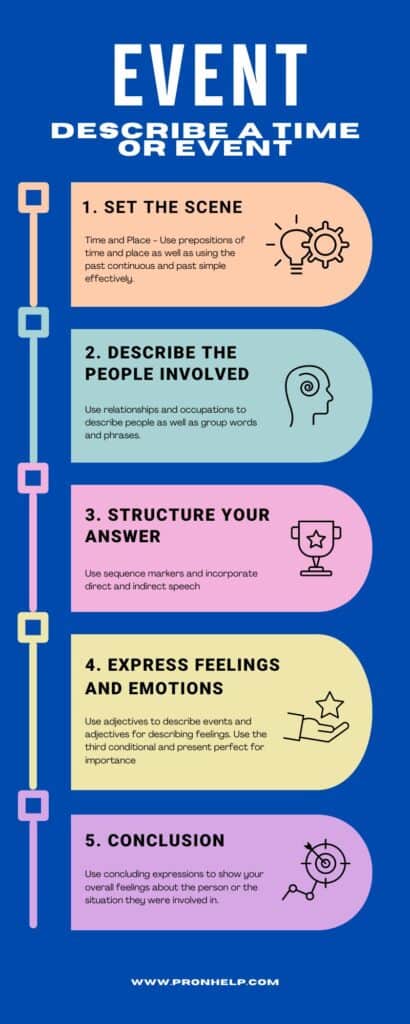
IELTS Band 6 Answer:
Setting the Scene: The movie I watched recently was called The Avengers. I watched it about two weeks ago at home, in the evening, with my brother. We both enjoy watching superhero movies, so we decided to watch it after dinner.
Describing the People Involved: My brother and I are very close, and we often watch movies together. He is a student, and he likes action movies, just like me.
Structuring Your Answer: The movie was about superheroes saving the world from a bad guy. There were many fights and explosions, which made the movie very exciting. At first, the team had some problems working together, but in the end, they became friends and defeated the enemy.
Expressing Feelings and Emotions: I really liked the movie because it was fun to watch. It had a lot of action, and I didn’t feel bored at any point. I also liked the characters because they were brave and funny.
Concluding Your Monologue: Overall, it was a great movie, and I would recommend it to anyone who enjoys action films.
Explanation:
- Grammar: Simple past and present tense; lacks variety in structures.
- Vocabulary: Basic adjectives such as “fun,” “brave,” and “exciting.”
- Fluency: Some pauses and hesitations.
- Coherence: Basic structure with a clear sequence but limited in depth.
IELTS Band 7 Answer:
Setting the Scene: The movie I recently watched was Inception, which I saw last weekend at home with a few friends. We had planned to watch a movie together, and since everyone had heard good things about it, we decided to give it a try. It was around 8 pm, and we watched it on a streaming service.
Describing the People Involved: I watched it with two of my closest friends, Tom and Sarah. Tom works in IT, and Sarah is studying architecture. Both of them love movies that make you think, so Inception was the perfect choice for us.
Structuring Your Answer: The movie is about a man who can enter people’s dreams and steal their ideas. The plot was quite complex, and it took us a while to understand what was going on. At the beginning, we were a bit confused, but as the movie progressed, everything started to make sense. The action scenes were really impressive, especially the part where the characters were fighting in a world without gravity.
Expressing Feelings and Emotions: I liked the movie because it was not only entertaining but also made me think. The concept of dreams within dreams was fascinating, and I found myself wondering what I would do if I had the same ability. The soundtrack and special effects were also amazing, which added to the overall experience.
Concluding Your Monologue: In conclusion, Inception is a movie that keeps you on the edge of your seat, and I would definitely recommend it to anyone who enjoys thought-provoking films.
Explanation:
- Grammar: Wider range of tenses (simple past, past continuous), more complex structures.
- Vocabulary: More descriptive vocabulary such as “fascinating,” “complex,” and “impressive.”
- Fluency: Generally smooth with few hesitations.
- Coherence: Good structure with clear progression of ideas and more detailed storytelling.
IELTS Band 8 Answer:
Setting the Scene: A few days ago, I watched Parasite, a movie I had been hearing about for a while. It was a Friday evening, and I decided to watch it alone at home. I’d been meaning to see it ever since it won the Academy Award, and I finally found the time. I settled in with some snacks, ready for what I knew would be an intense viewing experience.
Describing the People Involved: Although I watched it alone, I’d spoken to my friends about it beforehand. They all had different reactions—some were blown away by the cinematography, while others were deeply affected by the social themes. Most of my friends are in creative fields like film and art, so they appreciated the movie on a different level.
Structuring Your Answer: The movie is about a poor family that slowly infiltrates the household of a wealthy family by taking on various jobs. The tension builds as the story progresses, revealing the vast gap between social classes in a darkly comedic and dramatic way. From the very first scene, the director sets up an unsettling atmosphere, and as the movie unfolded, I was completely absorbed. At one point, I paused the movie just to process what was happening because the twists were so unexpected.
Expressing Feelings and Emotions: I found the film incredibly thought-provoking and unsettling. It left me questioning the inequalities in society and how people are affected by them. The use of symbolism was brilliant, and every detail seemed to have a deeper meaning. I couldn’t stop thinking about the movie even after it ended, which is always a sign of a great film. If I hadn’t watched it, I would’ve missed out on one of the most powerful films of the decade.
Concluding Your Monologue: In summary, Parasite is a masterpiece that blends suspense, drama, and social commentary perfectly. I would highly recommend it to anyone who enjoys films that challenge your perspectives and make you think long after the credits roll.
Explanation:
- Grammar: Uses a wide range of tenses, including present perfect and past continuous, with complex sentences.
- Vocabulary: Advanced descriptive vocabulary like “unsettling,” “absorbed,” “thought-provoking,” and “symbolism.”
- Fluency: Very smooth, with no pauses or hesitations.
- Coherence: Well-structured and engaging, with a clear and detailed narrative that includes personal reflection and deep analysis.
Key Differences:
- Band 6: The answer is simple and uses basic grammar and vocabulary. There’s little depth, and the structure is straightforward.
- Band 7: The answer is more detailed, with better use of tenses and more descriptive language. The structure is clear, and there is some analysis of the movie.
- Band 8: The answer is highly descriptive and analytical, with complex grammar structures and a wide range of vocabulary. The structure is sophisticated, and the response includes personal reflection and a deeper understanding of the movie’s themes.
IELTS Speaking Part 3 Quiz: Do You Know it All?

IELTS Speaking Part 3 AI Answers
Question 1: What kinds of movies do you think are successful in your country?
Band 6 Answer: “In my country, I think action movies are very successful because people like exciting stories and special effects. For example, movies like ‘The Fast and the Furious’ are very popular. Also, comedies do well because people want to relax and laugh after a long day. I think family movies are also popular because families can watch them together.”
Band 7 Answer: “In my country, action movies tend to be the most successful because they are full of thrilling scenes and impressive visual effects that capture people’s attention. Films like ‘The Fast and the Furious’ are especially popular among younger audiences. Additionally, comedies and family films also perform well at the box office, as they offer lighthearted entertainment that appeals to a wide range of people. People enjoy these genres because they provide an escape from everyday stress.”
Band 8 Answer: “In my country, action movies with high-budget special effects tend to dominate the box office, particularly franchises like ‘The Fast and the Furious,’ which attract large audiences. These films are highly successful because they offer an adrenaline-pumping experience that resonates with younger generations. Moreover, comedies and family films also find success, largely because they provide the kind of feel-good entertainment that appeals to families and those looking to unwind after a stressful day. There’s also a growing interest in socially conscious films, which tackle relevant societal issues and spark important conversations.”
Explanation:
- Band 6: The answer is clear but lacks development and complex structures. There are some basic ideas without much depth.
- Band 7: The answer is more structured, using linking words and expanding on reasons why certain types of movies are popular. There is a greater range of vocabulary.
- Band 8: This answer shows an even higher level of sophistication in language and ideas. It includes complex sentences, specific details, and broader commentary on social trends in film.
Question 2: What are the factors that make a successful movie?
Band 6 Answer: “I think a movie is successful if it has a good story and good actors. Also, special effects are important, especially in action or science fiction movies. If the movie is exciting or emotional, people will talk about it, and it can become successful.”
Band 7 Answer: “Several factors contribute to a movie’s success. A strong storyline is essential, as it keeps the audience engaged from start to finish. Moreover, good performances by talented actors can significantly elevate the film. Special effects are also important, especially in action or sci-fi genres. Finally, word-of-mouth recommendations and marketing play key roles in determining how successful a movie will be.”
Band 8 Answer: “A number of factors can determine the success of a film. First and foremost, a well-written, compelling storyline is crucial, as it keeps audiences engaged and emotionally invested. Equally important are the actors’ performances, which can either enhance or detract from the overall impact of the film. In addition, high-quality special effects are vital for certain genres like action or sci-fi, while strong marketing strategies and positive word-of-mouth also contribute significantly to a movie’s success. Social relevance and critical acclaim can also elevate a film’s status.”
Explanation:
- Band 6: The answer is basic with limited development of ideas and simple structures. The range of vocabulary is sufficient but not advanced.
- Band 7: The answer is more detailed and includes specific factors like word-of-mouth and marketing. There’s an effort to use more advanced vocabulary and connect ideas smoothly.
- Band 8: This response is highly developed, demonstrating a wide range of vocabulary and complex structures. It also introduces new factors like social relevance and critical acclaim, showing depth in the analysis.
Question 3: Do Chinese people prefer to watch domestic movies or foreign movies?
Band 6 Answer: “I think Chinese people like both, but maybe foreign movies are a bit more popular because they have bigger budgets and better special effects. But domestic movies are also important, especially for older people or people who prefer traditional stories.”
Band 7 Answer: “I believe that both domestic and foreign films are popular among Chinese audiences. However, foreign films, especially those from Hollywood, tend to have a wider appeal due to their large budgets and impressive special effects. That said, many people still enjoy watching domestic films, particularly those that focus on Chinese culture and history. Older generations, in particular, seem to prefer domestic productions.”
Band 8 Answer: “Chinese audiences enjoy a mix of both domestic and foreign films. Hollywood blockbusters are particularly popular due to their high production values, cutting-edge special effects, and universal themes that appeal to a global audience. However, there’s also a strong demand for domestic films, especially those that explore traditional Chinese culture, history, and social issues. These films often resonate more deeply with older generations and people who appreciate stories that reflect their own experiences and values.”
Explanation:
- Band 6: The answer is basic, with simple sentence structures and limited range in vocabulary. Ideas are presented but not deeply explored.
- Band 7: The answer expands on both sides of the argument, offering more reasons for the popularity of foreign and domestic films. There’s a wider range of vocabulary and more complexity in sentence structure.
- Band 8: The response is highly sophisticated, offering detailed explanations and using complex structures. It introduces additional insights into why certain films appeal to different demographics.
Question 4: Do you think only well-known directors can create the best movies?
Band 6 Answer: “I don’t think only famous directors can make great movies. New directors can also make good movies, especially if they have new ideas. But famous directors have more experience and usually make successful movies.”
Band 7 Answer: “I don’t believe that only well-known directors can make the best movies. In fact, there are many examples of new or lesser-known directors who have made highly successful films with fresh ideas. However, famous directors do have more experience and resources, which can sometimes lead to more polished productions.”
Band 8 Answer: “While well-known directors are often associated with high-quality films due to their experience and access to substantial resources, I don’t think they have a monopoly on making the best movies. Many emerging directors have produced groundbreaking films that have resonated with audiences, thanks to their innovative storytelling techniques and fresh perspectives. Ultimately, it’s the creativity and execution of the director’s vision that determines a film’s success, not necessarily their level of fame.”
Explanation:
- Band 6: Basic language with clear but simple ideas. Vocabulary and sentence structures are limited.
- Band 7: The answer includes more detail and a wider range of vocabulary. There’s more explanation and some complexity in ideas.
- Band 8: The response is highly developed with detailed reasoning and complex sentence structures. It introduces new ideas, like the importance of innovation.
Question 5: Do you think successful movies should have well-known actors or actresses in leading roles?
Band 6 Answer: “Yes, I think successful movies should have famous actors because people like to watch movies with actors they know. Famous actors are usually good at acting, and they can make the movie better. Also, when a movie has famous actors, more people will go to watch it because they like those actors.”
Band 7 Answer: “I believe having well-known actors or actresses in leading roles can help a movie become successful because people are drawn to familiar faces. Famous actors usually have a large fan base, which can increase a movie’s popularity. However, I don’t think it’s always necessary; sometimes unknown actors can give a fresh performance, which can also attract audiences if the story and direction are strong.”
Band 8 Answer: “While casting well-known actors can certainly contribute to a film’s success due to their star power and established fan bases, I don’t believe it’s an essential ingredient for every successful movie. Audiences are often drawn to compelling performances, regardless of an actor’s fame, and in some cases, less familiar faces can bring a level of authenticity or freshness that resonates more deeply with viewers. Ultimately, it’s the combination of the actor’s talent, the strength of the storyline, and the direction that determines a movie’s success.”
Explanation:
- Band 6: The answer is simple and clear, using basic structures. The student presents ideas without much detail or development. Vocabulary is functional but limited.
- Band 7: The answer is more developed, providing reasons for both sides of the argument. There is a wider range of vocabulary and more complex sentence structures, such as linking words like “however” to show contrast.
- Band 8: The answer shows sophistication, with a balance between both sides of the argument. Complex structures and advanced vocabulary are used, and there is deeper analysis, including ideas like “authenticity” and how unknown actors can resonate with audiences.
Question 6: Why do people prefer to watch movies in the cinema?
Band 6 Answer: “People like to watch movies in the cinema because the screen is big, and the sound is really good. It’s more exciting than watching at home. Also, people like to go to the cinema with their friends or family, so it’s a nice social activity. The atmosphere in the cinema is special, and it makes the movie more enjoyable.”
Band 7 Answer: “I think many people prefer watching movies in the cinema because of the big screen and high-quality sound, which make the experience much more immersive than watching at home. Also, going to the cinema can be a social event where people enjoy the film with friends or family. The atmosphere, with a shared audience, can make certain movies more exciting, especially action or horror films.”
Band 8 Answer: “Many people prefer the cinema because it offers an unparalleled viewing experience, with its large screen, surround sound, and overall immersive atmosphere. The sense of being fully engaged in the movie, without distractions, is a major appeal. Additionally, the social aspect of watching a film with others enhances the experience, as the collective reactions of the audience can heighten emotions during particularly intense or humorous scenes. For some, it’s also a nostalgic or traditional experience that holds sentimental value.”
Explanation:
- Band 6: The answer is straightforward and explains the main reasons, but it lacks depth and uses basic vocabulary. The sentences are simple, and ideas are not deeply explored.
- Band 7: This answer adds more development by explaining different reasons for preferring the cinema. The student introduces the idea of immersion and gives specific examples (action and horror films). There is also a wider range of vocabulary.
- Band 8: The answer is highly detailed and includes complex ideas, like the social and emotional impact of shared viewing experiences and the nostalgic value of going to the cinema. The vocabulary is more sophisticated, and there is a clear, structured flow in presenting the answer.
General Explanation of Differences:
- Band 6 answers: Basic sentence structures and vocabulary are used. The student communicates their ideas clearly but with limited detail, and there is little complexity in the analysis.
- Band 7 answers: The response is more developed, with a wider range of vocabulary and more complex grammar. The ideas are explained more thoroughly, and there is some attempt at contrasting or balancing arguments.
- Band 8 answers: The response is highly developed, using a broad range of complex vocabulary and sentence structures. The student provides deeper analysis, explores multiple perspectives, and uses more nuanced reasoning to support their points.
Related Content
21 Simple Steps to the IELTS Speaking Score You Want

Achieving a high score in the IELTS Speaking test requires both practice and strategy. While there are many methods to help you improve, these 21 tips will make a significant…
How to Answer If You Know Nothing in IELTS Speaking

Taking tests such as IELTS Speaking are extremely challenging for many reasons, with one of the main ones being that a certain amount of life experience is needed to be…
How to Avoid Making Sweeping Statements

Sweeping statements are statements which cover a broad topic in a concise or even terse manner. They make it seem as if everybody does something. This is really common in…
How to Best Use the Latest IELTS Speaking Questions

There are several pages on this site that are dedicated to the ‘latest’ IELTS speaking questions. These questions are released for three periods of four months each year. January to…
How to Describe A Person: The Ultimate Guide

In IELTS Speaking Part 2, it is really common to be asked to describe a person. Whether it they are an old person, someone who is patient, a relative you…
How to Describe a Place: The Ultimate Guide

In the IELTS Speaking test, especially in Part 2, candidates are often asked to describe a place. Whether it’s a flat you would like to own, a favorite spot in…
How to Describe a Time or Event: The Ultimate Guide

In the IELTS Speaking test, especially in IELTS Speaking Part 2, candidates are often asked to describe a time when they did something memorable or significant. This guide will walk…
How to Easily Boost Your IELTS Vocabulary Score

If your job or course involves technical language in English, integrating it into your IELTS vocabulary in your speaking responses can significantly enhance your performance. By steering your answers toward…
How to Eliminate Hesitation in IELTS Speaking Part 2

In IELTS Speaking Part 2, the examiner will give you a cue card. You have one minute to make some notes to help you speak on that topic/question for between…
How to Speak for Longer in IELTS Speaking Part 2

This is a great way to extend your answer for IELTS Speaking Part 2. You use a strategy to suit the question, you do well, but there is still too…
How to Use Chunking in IELTS Speaking Part 2

Don’t memorise your answers in IELTS Speaking Part 2, that’s one of the worst things you can do. It’s really easy for an examiner to know when IELTS Speaking test…
How to Use Natural English Expressions for Better Precision

Improve Your Skills! Master that feeling that you MUST answer correctly by using these natural expressions to show what you know or don’t know about a topic. There is no…
How to Zoom In: The Most Useful Technique for IELTS Speaking

Imagine you are just starting to watch your favourite TV series. The theme music is playing, you see a view of a city, then a neighbourhood, then a street, then a…
IELTS Speaking
Latest questions, sample answers as well as many resources that will boost your journey to IELTS speaking success, Strategies for each part of the test! IELTS Speaking General IELTS Speaking…
IELTS Speaking Format, Preparation and 8 Great Hacks for Success

It’s madness to go into any English-speaking test expecting to do well. The IELTS Speaking test is demanding, so you should use any knowledge you can glean to your advantage….
IELTS Speaking Part 1 Format and 6 Simple Little Tricks To Help You

Many students think IELTS Speaking Part 1 is easy. It is an ideal time to add more challenging English, but knowing little tricks helps too. Know the format, how to…
IELTS Speaking Part 1 Questions

Many students think that the IELTS Speaking Part 1 questions are the easiest and simplest of the three parts, but it is a great time to show off what you…
IELTS Speaking Part 1 Quiz: Is It as Easy as You Think?

Test your IELTS Speaking Part 1 knowledge by taking this quick quiz. How much do you really know about this part of the speaking test? Try it and find out!…
IELTS Speaking Part 1 Sample Answers

This is a list of sample answers for IELTS Speaking Part 1 questions. All have transcripts of the answers. Some of them have video, some audio. Home > IELTS >…
IELTS Speaking Part 1: 16 Great Ways Start Your Test!

Many students think that the IELTS Speaking Part 1 Questions are the easiest and simplest of the three parts, but it is a great time to show off what you…
IELTS Speaking Part 2 – Phrases and Vocabulary

Here are some sentences and phrases to help you with IELTS Speaking Part 2. These are particularly useful for students who are using one of my strategies. This is a…
IELTS Speaking Part 2 Quiz: It Doesn’t Need To Be Hell!

Most students fear Part 2 of the IELTS Speaking test, but using strategies common to every topic, it can really boost your speaking score. How much do you know about…
IELTS Speaking Part 2 Sample Answers

This is a list of sample answers for IELTS Speaking Part 2 questions. All have transcripts of the answers. Some have video, some audio. Home > IELTS > Speaking > Part 2
IELTS Speaking Part 2: Format, Tips, and 5 Powerful Hacks

Are you worried about your IELTS Speaking test? Many students feel overwhelmed, especially when it comes to Part 2 of the exam. But fear not! This guide will help you…
IELTS Speaking Part 3 – Quantities and Types of People

In IELTS Speaking Part 3, when many questions ask about ‘people’ or ‘children’ or ‘businesses’, it is much easier to answer if you use expressions for quantities of people and…