
For most IELTS Speaking test-takers, knowing what they need to do to get a higher band score is extremely vague. It is almost impossible for them to predict what score they will get, so often, they can only use their last IELTS Speaking test score as a guide.
Home > IELTS > Speaking > Sample Answers
An AI has created these sample answers so such students can discover the changes they need to make to their speaking responses to improve their results and reach their target IELTS Speaking score.
This page is for the IELTS Speaking Part 2 question below and its associated Part 3 questions:
Describe an old friend you had lost touch with and got in contact with again
You should say:
Who he/she is
How you knew each other
Why you lost contact
How you got in contact again
And explain how you felt after getting in contact again
Pros and Cons of This Method
Pros:
- Grammar: You can easily see the differences in the grammar used in each question.
- Vocabulary: You can easily see how the words and phrases are to a higher standard as the scores improve.
- Fluency and Coherence: As the score improves, you can see the increased use of sequence or discourse markers to assure the listener knows what is happening and when.
- Pronunciation: This is worth 20% of your score, so you should pay attention to the differences here. A simple way to improve
Cons:
- Grammar: Although there are differences between the answers, there are no mistakes, which is uncommon for these band scores.
- Vocabulary: While it is easy to see what is needed, to use better vocabulary, you need to practice seriously to include it fluently in your answers.
- Fluency and Coherence: There are very few pauses or hesitations which usually mark an IELTS Speaking test-takers Part 2 response.
- Pronunciation: Obviously, without audio or video, it’s impossible to get an example of the differences between the scores.
Author’s Thoughts:
- Video. Although it seems to be standard to put a video on YouTube with a teacher’s own answer to these questions, I don’t have the time or the patience to do that.
- Why AI?: I can make more sample answers with an AI in a short time. Anyone could do that, but many don’t want to or are too lazy.
- Different scores: The idea is to show the differences between the answers, rather than having perfect answers. Some of these answers are too short, or they repeat the question in the first sentence. They are not perfect, but they inform students what they need to do to improve!
- Me: I used to make videos of speaking answers, but it’s not about me or how good my course is, or how many likes I get on Instagram or YouTube. It’s about trying to help you pass your speaking test and changing your life.
- You: If you have any ideas on how this could be improved, any other pros and cons, or would just like to comment, please use the comment box at the bottom of the page. If you like the content, please share it.
IELTS Speaking Part 2 Quiz: It Doesn’t Need to be Hell!


IELTS Speaking Part 2 AI Answers
Describe an old friend you had lost touch with and got in contact with again
You should say :
Who he/she is
How you knew each other
Why you lost contact
How you got in contact again
And explain how you felt after getting in contact again
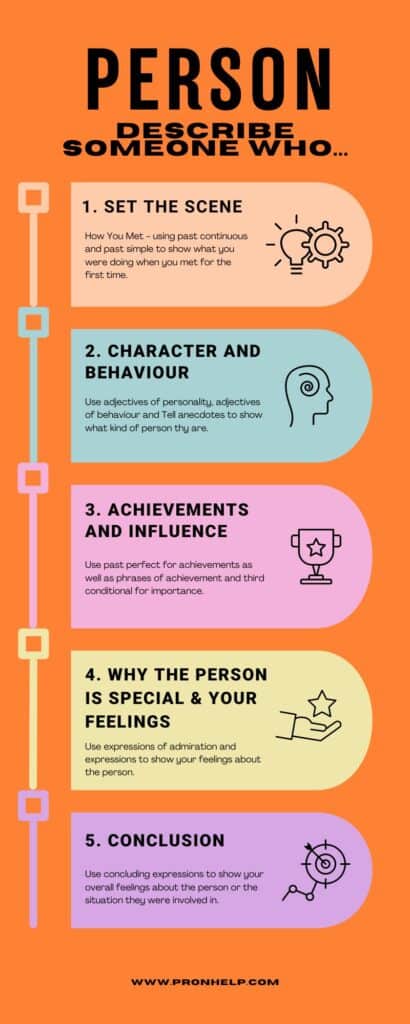
IELTS Band 6 Answer:
Setting the Scene: I’m going to talk about my old friend, John. We met when we were in school. I was in Grade 5, and he was in my class. We used to sit next to each other, and we became good friends. I remember we always played football after school.
Describing Character and Behaviour: John was a very funny person. He always made jokes, and people liked him because he was friendly. Sometimes he would get into trouble for talking too much during class, but he was never mean to anyone.
Expressing Achievements and Influence: After school, we lost contact because I moved to another city. We hadn’t spoken for a long time until recently. I found him on Facebook, and we started chatting again. He had already finished university and was working as a teacher. I was surprised by how much he had achieved.
Discussing Why the Person is Special and Your Feelings: It felt really good to talk to him again. He was still the same, making jokes and being kind. I felt happy because it brought back many good memories of our school days.
Concluding Your Monologue: In conclusion, I’m glad we got in touch again, and I hope we can stay in contact this time.
Explanation:
- Grammar: Uses basic past tenses (simple past, present perfect) but lacks variety.
- Vocabulary: Simple adjectives like “funny” and “friendly” are used.
- Fluency: Some hesitations and pauses.
- Coherence: The structure is straightforward, but the description is basic and lacks detail.
IELTS Band 7 Answer:
Setting the Scene: I’d like to talk about an old friend of mine, Sarah, whom I lost touch with for several years. We met when we were both attending university, back in 2010. I was studying business, and she was in the art program. We were both taking a psychology course together, and we quickly became close friends.
Describing Character and Behaviour: Sarah had a very creative personality. She was always coming up with new ideas and was incredibly passionate about her work. She could be a bit disorganised at times, but she was always kind and thoughtful. I remember once she surprised me with a painting she had made for my birthday.
Expressing Achievements and Influence: After we graduated, we lost contact because she moved abroad to work as a graphic designer. We didn’t stay in touch due to our busy lives, but last year, I decided to send her an email. I found out she had already won a few awards for her designs, which made me really proud of her. If we had stayed in touch, I’m sure we would have worked on some projects together.
Discussing Why the Person is Special and Your Feelings: It felt amazing to reconnect with her. It was like no time had passed, and I was impressed by how much she had grown. I admire her dedication to her craft, and I’m really happy we’ve started talking again.
Concluding Your Monologue: All in all, reconnecting with Sarah reminded me of how important our friendship was, and I hope we can maintain it in the future.
Explanation:
- Grammar: Better range of tenses, including present perfect and third conditional.
- Vocabulary: Descriptive adjectives such as “creative” and “disorganised” add depth.
- Fluency: Few hesitations; the answer flows smoothly.
- Coherence: Clear structure, with a more detailed and engaging narrative.
IELTS Band 8 Answer:
Setting the Scene: I’m going to talk about my childhood friend, Mark, whom I recently reconnected with after several years. We first met when we were around 10 years old, back in the late 90s, while playing in the neighbourhood park. At the time, I remember I was playing football with some other kids, and he joined in, and we instantly clicked. Over the years, we became inseparable, spending every weekend together.
Describing Character and Behaviour: Mark was a bit of a risk-taker, always adventurous and curious about everything. He was the kind of person who would convince you to go on wild adventures, even if it meant getting into a little trouble. But despite his mischievous side, he was incredibly loyal and reliable. I recall him standing up for me during a difficult time at school when I was being bullied. He had a big heart and was never afraid to speak his mind.
Expressing Achievements and Influence: Unfortunately, after high school, we drifted apart when he moved abroad for university, and we completely lost contact. I always regretted not keeping in touch, but about six months ago, I ran into him at a mutual friend’s wedding. We started talking again, and I discovered that he had achieved so much. He had completed his PhD and was working in environmental conservation. I couldn’t help but think that if we had kept in touch, we might have collaborated on some of his environmental projects.
Discussing Why the Person is Special and Your Feelings: Reconnecting with Mark was an emotional experience for me. Seeing how much he had grown and how dedicated he was to making a difference in the world was inspiring. I realised how much I had missed having someone like him in my life, and I truly admire his passion for his work. It gave me a new sense of appreciation for our friendship.
Concluding Your Monologue: In conclusion, reconnecting with Mark has been one of the highlights of my year, and it has reminded me of the importance of nurturing old friendships, no matter how much time has passed.
Explanation:
- Grammar: A wide range of tenses and structures, including past perfect and third conditional.
- Vocabulary: Advanced adjectives and expressions like “risk-taker,” “mischievous,” and “emotional experience” provide nuance.
- Fluency: Highly fluent, with minimal hesitation.
- Coherence: The narrative is well-organised, detailed, and engaging, with a rich emotional connection.
Key Differences:
- Band 6: The answer focuses on simple descriptions and uses basic grammar and vocabulary. There’s minimal detail, and the answer is shorter.
- Band 7: The answer includes a wider range of tenses and more descriptive vocabulary. The details and structure are better, with more depth in the explanation.
- Band 8: The answer uses complex grammar structures and a rich variety of vocabulary. The story is detailed, emotionally engaging, and well-structured, with clear reflections on the friendship and reconnection.
IELTS Speaking Part 3 Quiz: Do You Know it All?

IELTS Speaking Part 3 AI Answers
Question 1: Is it better to have a lot of friends than just a few friends?
Band 6 Answer: “I think it depends on the person. Some people like to have many friends because they enjoy socializing, and others prefer to have just a few close friends. For me, I think having a few good friends is better because you can trust them more.”
Band 7 Answer: “I believe it really depends on individual preferences. While some people enjoy having a large circle of friends because it allows them to be more social and meet a variety of people, others prefer a smaller group of close friends with whom they can develop deep, meaningful relationships. Personally, I think having a few close friends is better, as it helps build trust and stronger connections.”
Band 8 Answer: “I think the ideal number of friends varies depending on the individual’s personality and lifestyle. Some people thrive in large social circles where they can interact with many different people and experience a wide range of perspectives. On the other hand, those who prefer deeper, more meaningful connections may find that a smaller group of close friends is more fulfilling. Personally, I value quality over quantity when it comes to friendships, as I find that stronger bonds with a few trusted friends provide more emotional support and long-lasting relationships.”
Explanation:
- Band 6: The response is simple and clear but lacks depth. Vocabulary and sentence structures are basic, and the ideas are not fully developed.
- Band 7: The answer is more detailed, providing different perspectives. It uses a wider range of vocabulary and more complex sentence structures.
- Band 8: The response is highly developed with sophisticated vocabulary, complex grammar, and a deeper analysis. The speaker considers different viewpoints and provides a more nuanced explanation of the topic.
Question 2: Would having just a few friends limit your horizons?
Band 6 Answer: “Maybe a little. If you only have a few friends, you might not meet new people or learn new things. But if your friends are interesting and know a lot, it could still be okay.”
Band 7 Answer: “I think having only a few friends might limit your horizons to some extent because you won’t be exposed to as many different viewpoints or experiences. However, if those few friends have diverse backgrounds or interests, they can still help you learn new things and broaden your perspective.”
Band 8 Answer: “Having a small group of friends could potentially limit your exposure to different ideas and experiences, as you’re interacting with fewer people overall. However, if those friends come from diverse backgrounds or have wide-ranging interests, they can still provide valuable insights and help broaden your horizons. Ultimately, it depends on the quality and diversity of the relationships rather than the number of friends.”
Explanation:
- Band 6: The response is short and uses simple sentence structures. The explanation is not fully developed and only covers one idea.
- Band 7: This answer expands on the idea and uses more varied vocabulary and grammar. It provides a clearer explanation with a bit more detail about the effects of having fewer friends.
- Band 8: The response offers a more sophisticated and well-rounded perspective. It acknowledges both the potential limitations and benefits of having fewer friends, with advanced vocabulary and grammar structures.
Question 3: Do you think you are good at maintaining good relationships with others?
Band 6 Answer: “Yes, I think so. I try to stay in touch with my friends and family, and I help them when they need it. I think I’m friendly and easy to get along with.”
Band 7 Answer: “I believe I’m fairly good at maintaining relationships. I make an effort to stay connected with friends and family, whether through regular communication or helping them when they need support. I also try to be understanding and approachable, which helps me get along well with others.”
Band 8 Answer: “Yes, I consider myself to be quite good at maintaining strong relationships with others. I prioritize open communication and make a conscious effort to stay connected with friends and family, whether it’s through regular check-ins or offering support when needed. Additionally, I believe empathy and emotional intelligence play a key role in building and sustaining long-lasting relationships, and I try to apply these qualities in my interactions with others.”
Explanation:
- Band 6: The response is basic, using simple grammar and vocabulary. The ideas are clear but not very detailed.
- Band 7: The answer provides more detail, using a wider range of vocabulary and more varied sentence structures. It also offers more depth regarding how the speaker maintains relationships.
- Band 8: The response is much more advanced, with a thorough explanation of how the speaker maintains relationships, incorporating more sophisticated vocabulary and complex grammar. The speaker demonstrates a deeper understanding of the topic.
Question 4: Why do old friends lose touch with each other?
Band 6 Answer: “Old friends sometimes stop talking because they get busy with life. Maybe they move to another city or start a new job, so it’s hard to stay in contact. Also, people change over time and may not have the same interests anymore.”
Band 7 Answer: “Old friends often lose contact because life circumstances change. For example, people might move to different cities for work or education, which makes it harder to maintain regular communication. Additionally, over time, people’s interests and priorities can shift, leading to less in common with old friends.”
Band 8 Answer: “Old friends often drift apart due to significant changes in their personal or professional lives. For instance, moving to a new city or country, starting a demanding job, or having a family can make it difficult to maintain regular contact. Additionally, as individuals grow and evolve, their values, priorities, and interests may change, which can lead to a natural distancing if they no longer share the same passions or goals.”
Explanation:
- Band 6: The answer is straightforward but somewhat limited in vocabulary and detail. The sentence structure is simple, and the ideas are not fully developed.
- Band 7: The response is more developed, with a clearer explanation and more sophisticated vocabulary. It addresses multiple reasons for losing touch with old friends.
- Band 8: The answer is highly detailed, with advanced vocabulary and complex sentence structures. It explores both practical and emotional reasons for losing touch and is more nuanced in its analysis.
Question 5: Why do people need to make new friends?
Band 6 Answer: “People need new friends because their life changes. Maybe they move to a new place or start a new job, so they meet new people. Also, sometimes you just want to meet someone new and learn different things from them.”
Band 7 Answer: “People often need to make new friends when they go through life changes, like moving to a new city or starting a new job. Making new friends can also help you learn different things and get new perspectives. It’s important to have friends who match your current stage of life and share your interests.”
Band 8 Answer: “People feel the need to form new friendships for various reasons, especially when their life circumstances change, such as moving to a different location or starting a new phase in their career. Making new friends can provide fresh perspectives and opportunities for personal growth. It also helps individuals adapt to their evolving environments by building connections with those who share similar current interests or lifestyles.”
Explanation:
- Band 6: The response is simple with basic vocabulary and ideas. The explanation is brief, and the grammar is straightforward.
- Band 7: The answer offers more detail, with a wider range of vocabulary and slightly more complex sentence structures. It explores both practical and personal reasons for making new friends.
- Band 8: The response is more sophisticated, with advanced vocabulary and a more analytical approach. It not only discusses the practical aspects but also addresses personal growth and adaptation.
Question 6: Why do we have to give up some old friends?
Band 6 Answer: “Sometimes we need to stop being friends with old friends because we don’t have time for them anymore. Also, if we don’t have the same interests, it’s hard to stay friends. Life changes, and we change too.”
Band 7 Answer: “There are times when we have to let go of old friends, especially when we don’t have much in common anymore or when life becomes too busy to maintain regular contact. Also, if a friendship no longer feels fulfilling or if it becomes one-sided, it might be better to move on.”
Band 8 Answer: “Letting go of old friendships can be necessary when personal growth or life circumstances cause a significant divergence in interests, values, or priorities. As we evolve, the dynamics of some friendships may no longer align with our current needs or emotional well-being. In some cases, maintaining old friendships out of habit rather than genuine connection can lead to emotional exhaustion, making it important to gracefully part ways for mutual benefit.”
Explanation:
- Band 6: The answer is basic, with simple grammar and vocabulary. The reasoning is clear but not very detailed or reflective.
- Band 7: This response introduces more nuance and expands on why we might need to give up old friends. The vocabulary is more varied, and the ideas are better developed.
- Band 8: The answer is thorough and explores deeper emotional and psychological reasons for giving up old friendships. The vocabulary is sophisticated, and the grammar is more complex, with greater emphasis on reflective thinking.
General Explanation of Differences:
- Band 6 Answers: These responses are clear and direct, using basic vocabulary and simple sentence structures. The ideas are not fully developed, and the answers focus on one or two aspects of the topic.
- Band 7 Answers: These responses offer more detail, with more complex sentence structures and a wider range of vocabulary. The ideas are explored in greater depth, and the speaker gives more reasons or explanations.
- Band 8 Answers: These responses are the most sophisticated, with nuanced ideas, advanced vocabulary, and varied grammar. The speaker considers multiple angles, reflects deeply on the topic, and provides a well-rounded explanation.
Related Content
21 Simple Steps to the IELTS Speaking Score You Want

Achieving a high score in the IELTS Speaking test requires both practice and strategy. While there are many methods to help you improve, these 21 tips will make a significant…
How to Answer If You Know Nothing in IELTS Speaking

Taking tests such as IELTS Speaking are extremely challenging for many reasons, with one of the main ones being that a certain amount of life experience is needed to be…
How to Avoid Making Sweeping Statements

Sweeping statements are statements which cover a broad topic in a concise or even terse manner. They make it seem as if everybody does something. This is really common in…
How to Best Use the Latest IELTS Speaking Questions

There are several pages on this site that are dedicated to the ‘latest’ IELTS speaking questions. These questions are released for three periods of four months each year. January to…
How to Describe A Person: The Ultimate Guide

In IELTS Speaking Part 2, it is really common to be asked to describe a person. Whether it they are an old person, someone who is patient, a relative you…
How to Describe a Place: The Ultimate Guide

In the IELTS Speaking test, especially in Part 2, candidates are often asked to describe a place. Whether it’s a flat you would like to own, a favorite spot in…
How to Describe a Time or Event: The Ultimate Guide

In the IELTS Speaking test, especially in IELTS Speaking Part 2, candidates are often asked to describe a time when they did something memorable or significant. This guide will walk…
How to Easily Boost Your IELTS Vocabulary Score

If your job or course involves technical language in English, integrating it into your IELTS vocabulary in your speaking responses can significantly enhance your performance. By steering your answers toward…
How to Eliminate Hesitation in IELTS Speaking Part 2

In IELTS Speaking Part 2, the examiner will give you a cue card. You have one minute to make some notes to help you speak on that topic/question for between…
How to Speak for Longer in IELTS Speaking Part 2

This is a great way to extend your answer for IELTS Speaking Part 2. You use a strategy to suit the question, you do well, but there is still too…
How to Use Chunking in IELTS Speaking Part 2

Don’t memorise your answers in IELTS Speaking Part 2, that’s one of the worst things you can do. It’s really easy for an examiner to know when IELTS Speaking test…
How to Use Natural English Expressions for Better Precision

Improve Your Skills! Master that feeling that you MUST answer correctly by using these natural expressions to show what you know or don’t know about a topic. There is no…
How to Zoom In: The Most Useful Technique for IELTS Speaking

Imagine you are just starting to watch your favourite TV series. The theme music is playing, you see a view of a city, then a neighbourhood, then a street, then a…
IELTS Speaking
Latest questions, sample answers as well as many resources that will boost your journey to IELTS speaking success, Strategies for each part of the test! IELTS Speaking General IELTS Speaking…
IELTS Speaking Format, Preparation and 8 Great Hacks for Success

It’s madness to go into any English-speaking test expecting to do well. The IELTS Speaking test is demanding, so you should use any knowledge you can glean to your advantage….
IELTS Speaking Part 1 Format and 6 Simple Little Tricks To Help You

Many students think IELTS Speaking Part 1 is easy. It is an ideal time to add more challenging English, but knowing little tricks helps too. Know the format, how to…
IELTS Speaking Part 1 Questions

Many students think that the IELTS Speaking Part 1 questions are the easiest and simplest of the three parts, but it is a great time to show off what you…
IELTS Speaking Part 1 Quiz: Is It as Easy as You Think?

Test your IELTS Speaking Part 1 knowledge by taking this quick quiz. How much do you really know about this part of the speaking test? Try it and find out!…
IELTS Speaking Part 1 Sample Answers
This is a list of sample answers for IELTS Speaking Part 1 questions. All have transcripts of the answers. Some of them have video, some audio. Home > IELTS >…
IELTS Speaking Part 1: 16 Great Ways Start Your Test!

Many students think that the IELTS Speaking Part 1 Questions are the easiest and simplest of the three parts, but it is a great time to show off what you…
IELTS Speaking Part 2 – Phrases and Vocabulary

Here are some sentences and phrases to help you with IELTS Speaking Part 2. These are particularly useful for students who are using one of my strategies. This is a…
IELTS Speaking Part 2 Quiz: It Doesn’t Need To Be Hell!

Most students fear Part 2 of the IELTS Speaking test, but using strategies common to every topic, it can really boost your speaking score. How much do you know about…
IELTS Speaking Part 2 Sample Answers
This is a list of sample answers for IELTS Speaking Part 2 questions. All have transcripts of the answers. Some have video, some audio. Home > IELTS > Speaking > Part 2
IELTS Speaking Part 2: Format, Tips, and 5 Powerful Hacks

Are you worried about your IELTS Speaking test? Many students feel overwhelmed, especially when it comes to Part 2 of the exam. But fear not! This guide will help you…
IELTS Speaking Part 3 – Quantities and Types of People

In IELTS Speaking Part 3, when many questions ask about ‘people’ or ‘children’ or ‘businesses’, it is much easier to answer if you use expressions for quantities of people and…